
The Crystal Clear Case for Sourcing Your Own Keycaps: A Look Inside the Supply Chain
Why Does That Tiny Piece of Plastic Cost So Much?
If you’ve dipped your toes into the world of custom mechanical keyboards, you’ve likely asked this question. You find the perfect keyboard base, pick your favorite switches, and then you hit the keycap market. Suddenly, you’re looking at sets that cost anywhere from $30 to well over $150. What gives? The answer often lies in a long and layered supply chain.
For niche hobbyist items like custom keycaps, the journey from factory to your desk can be complex. A product might pass from the manufacturer to an exporter, then to an overseas brand, a distributor, and finally a retailer. Each step adds a markup for logistics, marketing, and profit. This is especially true for unique items like crystal-clear keycaps, where aesthetic appeal drives demand.
Decoding Keycap Specs: What Really Matters
When you’re shopping for keycaps, especially transparent ones, it’s easy to get lost in the jargon. Many enthusiasts are paying for brand names and elaborate packaging that are layered on top of the core product. To find true value, you need to know what to look for at the source.
- Material is Key: For transparent or “glass” style keycaps, the material of choice is Polycarbonate (PC). PC is known for its exceptional clarity and durability, allowing RGB lighting to shine through brilliantly. You may see listings confuse materials, sometimes mentioning PBT or ABS for a transparent cap. A savvy buyer knows that for true transparency, PC is the industry standard.
- Profile and Feel: The shape of the keycap, or its “profile,” affects both look and typing feel. The XDA profile, for instance, features a uniform, flat, and wide surface area. It’s a popular choice for minimalist builds and provides a consistent typing experience across the entire keyboard.
- The Source: The biggest factor in price is often how many middlemen are between you and the factory. Sourcing from an OEM/ODM (Original Equipment Manufacturer/Original Design Manufacturer) platform can give you a more direct line to the product, bypassing several layers of retail markup.
A Clear Example of Factory-Direct Value
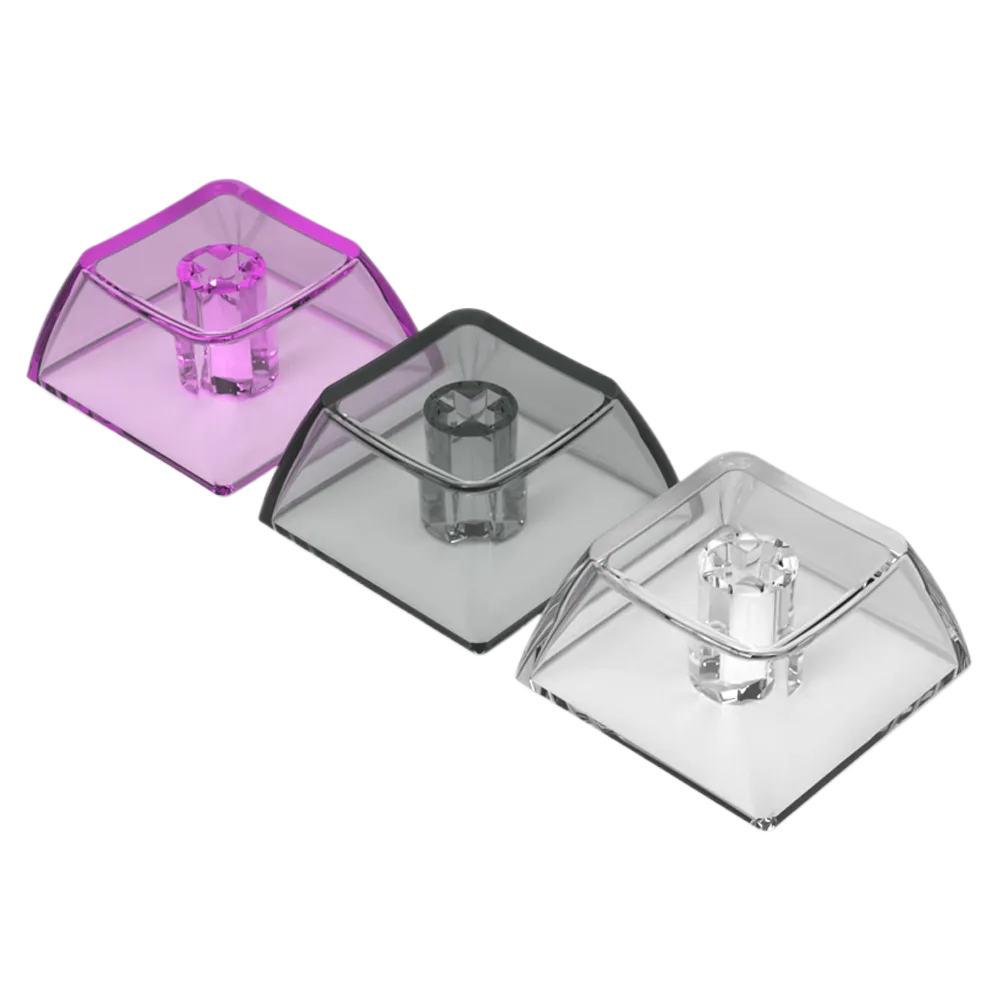
To see what a difference sourcing closer to the manufacturer makes, consider a product like the allwinOEM/ODM Transparent XDA Keycap. This isn’t a fancy, branded box you’d find at a high-end boutique. It’s the essential component, straight from the people who make it.
Here’s why it stands out to an informed buyer:
- Correct Material: It’s made from high-quality PC material, perfect for that crystal-clear look that makes a backlight pop.
- Popular Profile: The XDA profile is a sought-after choice for custom builders seeking a modern, uniform aesthetic.
- Blank Canvas: As a blank keycap, it’s the ultimate minimalist statement. It’s also ideal for use in key switch testers, allowing you to focus purely on the feel of the switch without the distraction of legends.
By focusing on these core quality markers, you can identify a high-value product. You’re getting the essential components for a stunning keyboard build—durable PC material and a comfortable XDA profile—without paying for multiple rounds of branding and distribution.
Build Smarter, Not Pricier
Your custom keyboard is a reflection of your personal style and preference. Don’t let complex supply chains and hidden markups dictate your budget. By understanding what makes a keycap great and where to look, you can build a premium-feeling keyboard for a fraction of the cost.
Ready to see the difference for yourself? Take a closer look at the specs and quality of a direct-from-source component. You might be surprised at the value you can find.
Check out the allwinOEM/ODM Transparent PC Keycap and start your next build with a clear advantage.


Add comment