
The Hidden Markups on Wireless Keyboards: How to Get More for Less
The Mechanical Keyboard Paradox: More Features, Higher Prices?
The world of mechanical keyboards has exploded. Gone are the days of clunky, wired-only beige boxes. Today, the market is filled with sleek, wireless, and highly customizable options. But with this boom comes a confusing problem for buyers: why can two keyboards with nearly identical features—like wireless connectivity, a compact layout, and RGB lighting—have a price difference of 100% or more?
The answer often lies not in the quality of the hardware, but in the journey it takes from the factory floor to your desk. This journey is filled with hidden markups that you, the end consumer, end up paying for.
From Factory Blueprint to Branded Product: The Markup Trail
Many of the most popular keyboards on the market don’t actually start their life with a famous brand name. They begin as a well-designed, feature-rich product from an Original Equipment Manufacturer (OEM) or Original Design Manufacturer (ODM). Here’s a simplified look at the supply chain:
- The Factory (Source): A manufacturer designs and produces a high-quality keyboard. They have the engineering, the molds, and the production lines. Their price is based on materials, R&D, and manufacturing costs.
- The Brand: A well-known brand selects this keyboard, adds its logo, designs fancy packaging, and maybe requests a minor color change.
- The Markups Begin: The brand then adds its own margin. This covers massive marketing budgets, influencer campaigns, international distribution costs, and, of course, their profit.
- The Retailer: The product is then sold to retailers, who add their own markup to cover storefront costs, staff, and their own profit margin.
By the time that keyboard reaches you, its price may have doubled or even tripled from its original factory cost, with very few changes to the core product itself.
How to Identify Real Value in a Keyboard
So, how can a savvy buyer cut through the noise? By learning to look for the core features that matter, you can find products that offer incredible value, often directly from the source. Here’s what to pay attention to:
- Connectivity: Is it “Tri-Mode”? This is the gold standard, offering USB-C (wired), 2.4GHz wireless (for low-latency gaming), and Bluetooth (for easy switching between devices like laptops and tablets).
- Layout: A compact 75% (84-key) layout is the sweet spot for many. It keeps the essential arrow keys and function row while saving a ton of desk space compared to a full-size keyboard.
- Design & Profile: A low-profile design isn’t just about looks. It can offer a more ergonomic typing angle, reducing wrist strain and making the keyboard much more portable.
- Switches & Feel: Look for reliable mechanical switches. Many factories use high-quality switches (like Red, Brown, or Blue variants) that provide the excellent tactile feel and durability you expect, without the added cost of a niche brand name.
A Perfect Example: The YK75 Tri-Mode Keyboard
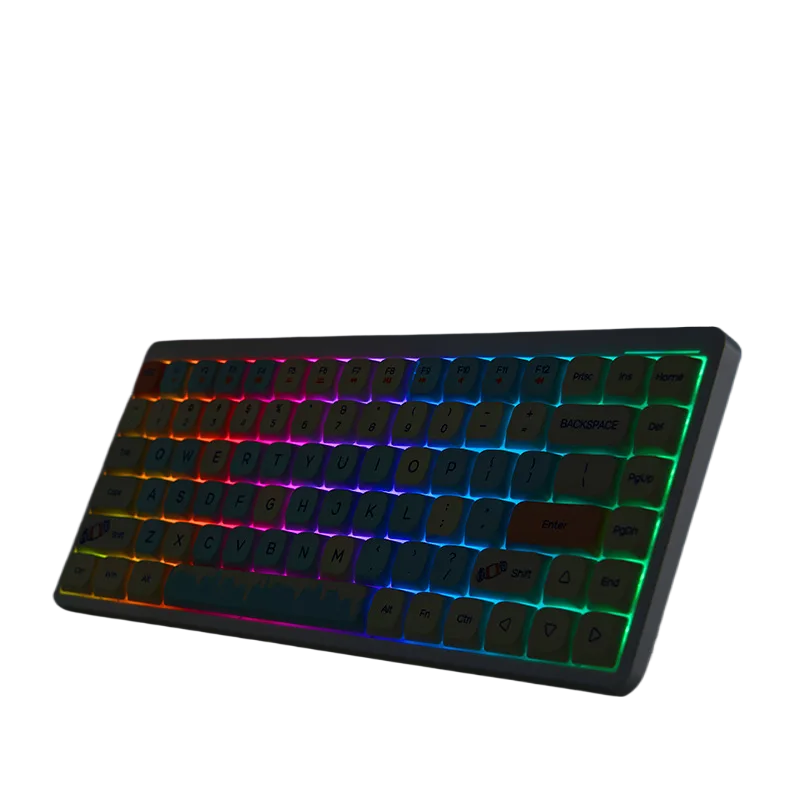
To see this in action, you only need to look at a product like the allwinOEM/ODM YK75 Tri-Mode Mechanical Low-Profile Keyboard. This is the kind of product that ticks all the boxes before a big brand name gets attached.
Let’s break it down:
- Triple Connectivity: It has wired, 2.4G, and Bluetooth modes. Versatility, check.
- Space-Saving Layout: The 84-key design is compact and efficient. Functionality, check.
- Modern Ergonomics: Its slim, low-profile body is comfortable for long sessions and easy to pack in a bag. Portability, check.
- Quality Internals: It uses dependable Red mechanical switches for a smooth, linear typing experience and offers customizable backlighting. Performance, check.
This is the “source DNA” of a premium keyboard. By looking at a product like the YK75, you’re seeing the core value proposition without the layers of marketing and branding costs. You’re getting the innovation without paying for the hype.
Get Premium Features, Not a Premium Price Tag
The next time you’re shopping for a new keyboard, don’t just be swayed by a familiar logo. Look at the spec sheet. Look for tri-mode connectivity, a smart layout, and a design that fits your needs. You might just find that the best value comes from looking closer to the source, where the focus is on engineering, not advertising.
If you want to see what a feature-packed keyboard looks like before the brand markups are added, take a closer look at the specs and design of the allwinOEM/ODM YK75 Tri-Mode Keyboard. It’s the smarter way to upgrade your setup.


Add comment