
Unlocking the True Cost: Why Your Compact Mechanical Keyboard is So Expensive
The Rise of the Compact Keyboard and Its Confusing Prices
The world of mechanical keyboards has exploded. Gone are the days of one-size-fits-all clunky peripherals. Today, enthusiasts and professionals alike are flocking to compact layouts—like the popular 65% and 68-key designs—for their minimalist aesthetic and ergonomic benefits. But as you shop around, you’ll notice something strange: prices for keyboards with nearly identical features can range from affordable to astonishingly expensive. What gives?
The Hidden Costs in Your Keyboard’s Journey
The answer often lies in a long and layered supply chain. A high-quality keyboard doesn’t just appear on a retail shelf. Its journey typically involves multiple stages, each adding a significant markup:
- The Factory: This is where the keyboard is actually designed and manufactured, using core components like switches, PCBs, and keycaps. This is the baseline cost.
- The Brand: A retail brand buys the keyboard from the factory, adds its logo, designs fancy packaging, and launches a massive marketing campaign. This branding effort can add a substantial premium.
- Logistics and Distribution: The product is then shipped internationally, incurring costs for freight, import duties, and taxes. From there, it goes to national distributors and then local retailers, each taking their cut.
By the time that keyboard reaches you, its final price may be several times higher than its original factory cost. You’re not just paying for the hardware; you’re paying for marketing, middlemen, and multiple layers of profit.
How to Be a Smarter Keyboard Buyer
So, how do you find a great deal without sacrificing quality? The key is to focus on what truly matters: the core components and build quality, rather than just the brand name on the box.
When evaluating a mechanical keyboard, pay attention to:
- The Switches: Are they a reputable type suited for your needs? Linear switches (like Reds) are great for fast gaming and smooth typing, while Tactile (Browns) or Clicky (Blues) offer different feedback.
- The Layout: Does it have the keys you need in a form factor that saves desk space? A 68-key layout is a fantastic sweet spot, retaining arrow keys while remaining compact.
- Build & Features: Look for solid construction (like durable ABS plastic) and essential features like backlighting and a stable connection.
Often, you can find keyboards with the exact same high-quality components used by big brands, but without the inflated price tag, by looking closer to the original equipment manufacturer (OEM).
A Prime Example: The allwinOEM/ODM
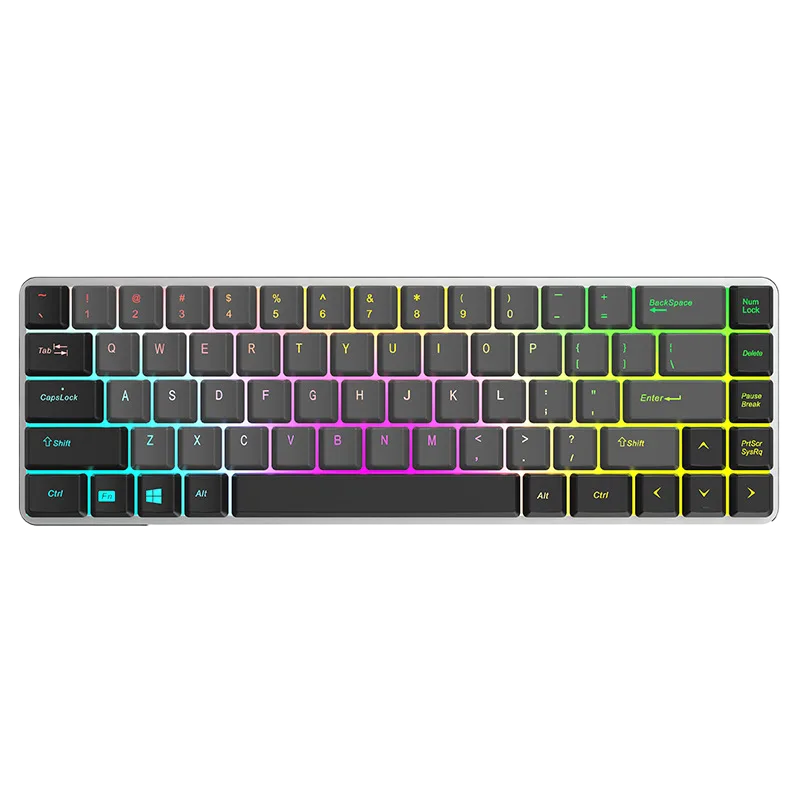
This brings us to a perfect illustration of this value principle: the allwinOEM/ODM 68-Key Mechanical Keyboard. This keyboard is a sourcing insider’s dream, packing all the features that users demand into a straightforward, high-value package.
Let’s break down why it stands out:
- Ideal Compact Layout: With 68 keys, it strikes the perfect balance between a small footprint and functionality, keeping dedicated arrow keys that many smaller boards sacrifice.
- Performance-Oriented Red Switches: It comes equipped with linear Red switches, the go-to choice for gamers and fast typists who need smooth, responsive keystrokes without any tactile bump.
- Essential Features Included: You get vibrant mixed RGB backlighting for a great aesthetic and a reliable wired connection for lag-free performance. The durable ABS construction ensures it can handle daily use.
The Delivers the core experience of a premium compact mechanical keyboard without the layers of retail markups. It’s a testament to what’s possible when you prioritize performance over branding.
Get Factory-Level Value Today
Next time you’re shopping for a new keyboard, ask yourself what you’re really paying for. If you want top-tier features without funding a massive marketing budget, it’s time to look directly at the source.
Ready to experience a high-performance compact keyboard at a price that makes sense? Check out the specifications and see the incredible value for yourself.




Add comment