
Why Are Keyboards for Seniors So Expensive? The Hidden Costs You’re Paying
The Accessibility Tax: Why Simple Tech Can Cost So Much
Have you ever searched for a piece of technology designed for accessibility, like a large-print keyboard for a parent or grandparent, only to be shocked by the price? You’re not alone. These essential tools often carry a surprisingly high price tag in local electronics or specialty stores. This isn’t because they are incredibly complex to manufacture. In many cases, the high price is a result of a long and layered supply chain.
What Makes a Keyboard Senior-Friendly?
First, let’s clarify what we’re talking about. An accessibility-focused keyboard isn’t about flashy lights or mechanical switches. It’s about clarity, simplicity, and ease of use. The core features that matter are:
- Large, Bold Print: The letters, numbers, and symbols are significantly larger than on a standard keyboard, reducing the need to squint.
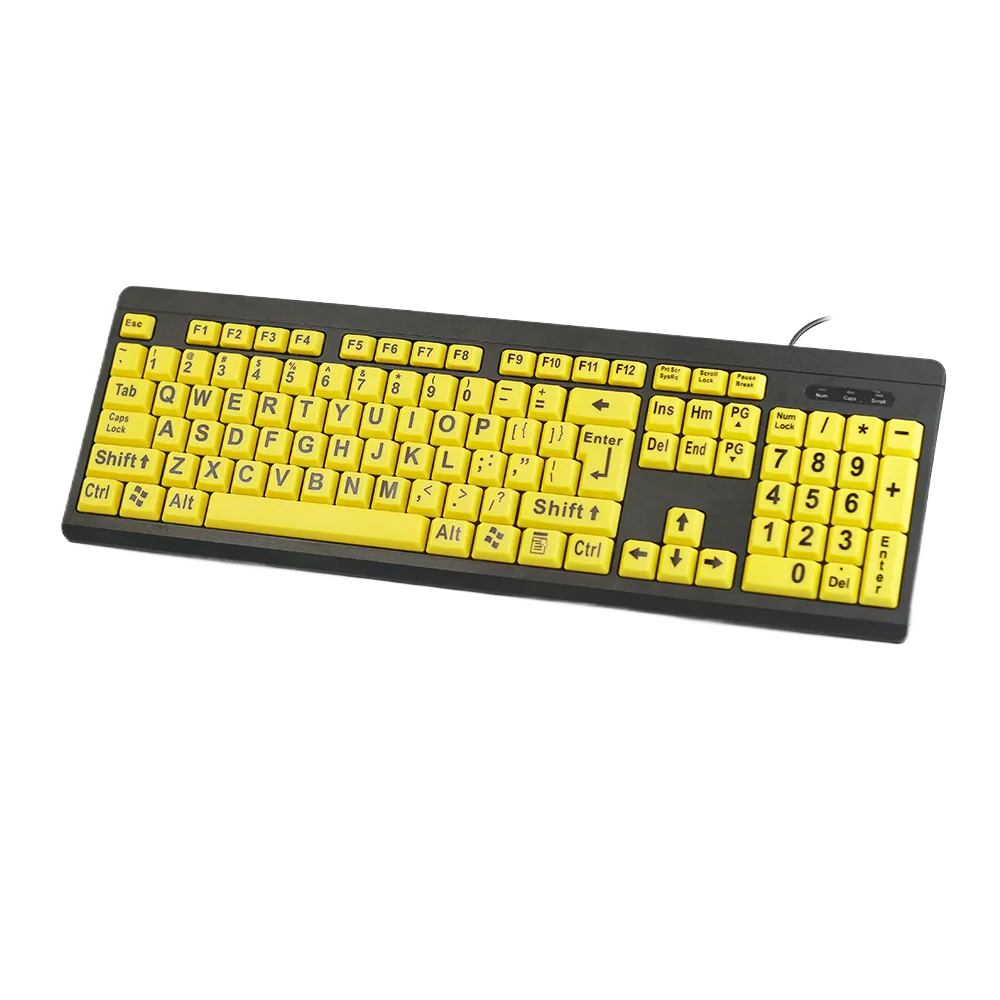
- High Contrast: A bright, non-glare background with dark, clear text makes each key stand out. Yellow keys with black print are a popular and highly effective combination for visibility.
- Reliable Connection: A simple, wired USB connection means no batteries to replace, no confusing Bluetooth pairing, and a consistent, reliable link to the computer.
Unpacking the Price: From Factory Floor to Retail Shelf
So, why the high cost? Products designed for niche markets often travel through multiple hands before they reach you. A factory produces the keyboard, sells it to an exporter, who sells it to an importer in your country. That importer then sells it to a national distributor, who in turn sells it to the retail store where you finally see it. Each step adds a markup to cover their own costs and profit.
For a product like a specialized keyboard, which sells in lower volumes than standard models, these cumulative markups can significantly inflate the final price. The result is that a straightforward, functional device can end up costing much more than it needs to.
How Savvy Buyers Find Better Value
To avoid paying for these hidden layers, it pays to look for products closer to the source. When evaluating an accessibility keyboard, focus on the fundamentals rather than a brand name that has passed through a dozen middlemen. Pay attention to:
- Build Quality: Look for durable materials like ABS plastic, which can withstand daily use.
- Core Features: Does it have the high-contrast, large-print keys you need? Is the connection a simple, plug-and-play USB?
- Simplicity: Often, the best designs are the most straightforward. Unnecessary features can add cost and complexity.
A Case in Point: The T801 Large Print Keyboard
A perfect example of a product that focuses on essential features is the allwinOEM/ODM Wired Keyboard. It is designed from the ground up for visibility and ease of use. It features the classic high-contrast yellow keys with large, black print that makes typing easier for anyone with visual impairments.
The construction is a durable ABS plastic, and it uses a standard wired USB connection for maximum reliability. By focusing on these core, high-impact features, it delivers exactly what users need without the inflated cost associated with complex supply chains.
If you or a loved one could benefit from a clearer, more comfortable typing experience, don’t settle for the high prices at retail. By understanding where the value comes from, you can find a high-quality solution that is both effective and affordable. Check out the Large Print Yellow Key Keyboard to see what a direct-from-source option looks like.



Add comment